
Screens are everywhere in a teen’s life, creating real tension for families trying to figure out what’s healthy. Parents know screens aren’t all bad, but they also see the downsides when usage gets out of hand. For teens, it’s less about counting hours and more about making sure screens don’t crowd out sleep, exercise, and real-world connections.
Blume Behavioral Health, a Mental Health Treatment Center for Teens in Redondo Beach, approaches technology not as the inherent problem, but as a tool that can cause struggles when its use becomes unbalanced. Intervention may be considered when screens start replacing essential activities like sleep, exercise, or time with friends and family.
Building healthier screen habits involves looking at how teens use their devices, not just for how long. Instead of tracking minutes, it is helpful to consider what they are watching, when, and what activities it might be replacing. When families focus on balance, teens can learn to manage their own screen time without constant supervision.
If anxiety, withdrawal, or behavior changes are tied to screen use, talking to a professional can help a family find a healthier rhythm. Blume Behavioral Health offers specialized support to help adolescents and their families navigate these challenges and support teen mental health.
What Counts as Screen Time?
Screen time isn’t as simple as it used to be. Phones do everything now, which makes it harder to draw clear lines. Knowing the difference helps parents set smarter limits.
Screen time generally falls into four main categories:
- Passive Consumption: Watching TV shows, movies, or scrolling through social media feeds without interacting
- Interactive Consumption: Playing video games
- Communication: Video chatting with family, texting friends, or using social media messaging
- Content Creation and Education: Using devices for schoolwork, coding, digital art, or writing
Passive consumption is the most concerning for mental health, as it promotes inactivity.
Differentiating Healthy vs. Unhealthy Use
Not all screen time affects teens the same way. Learning something new on a screen is different from mindless scrolling.
Key distinctions include:
- Purpose: Is the teen using the device to learn or mindlessly swiping to avoid boredom?
- Timing: Using a screen for homework during the day is one thing. Late-night scrolling messes with melatonin and makes it harder to fall asleep.
- Displacement: What matters most is what screens are pushing out. If your teen’s still sleeping well, staying active, and showing up for family dinners, their phone use is probably fine.
Recommended Screen Time for Teens
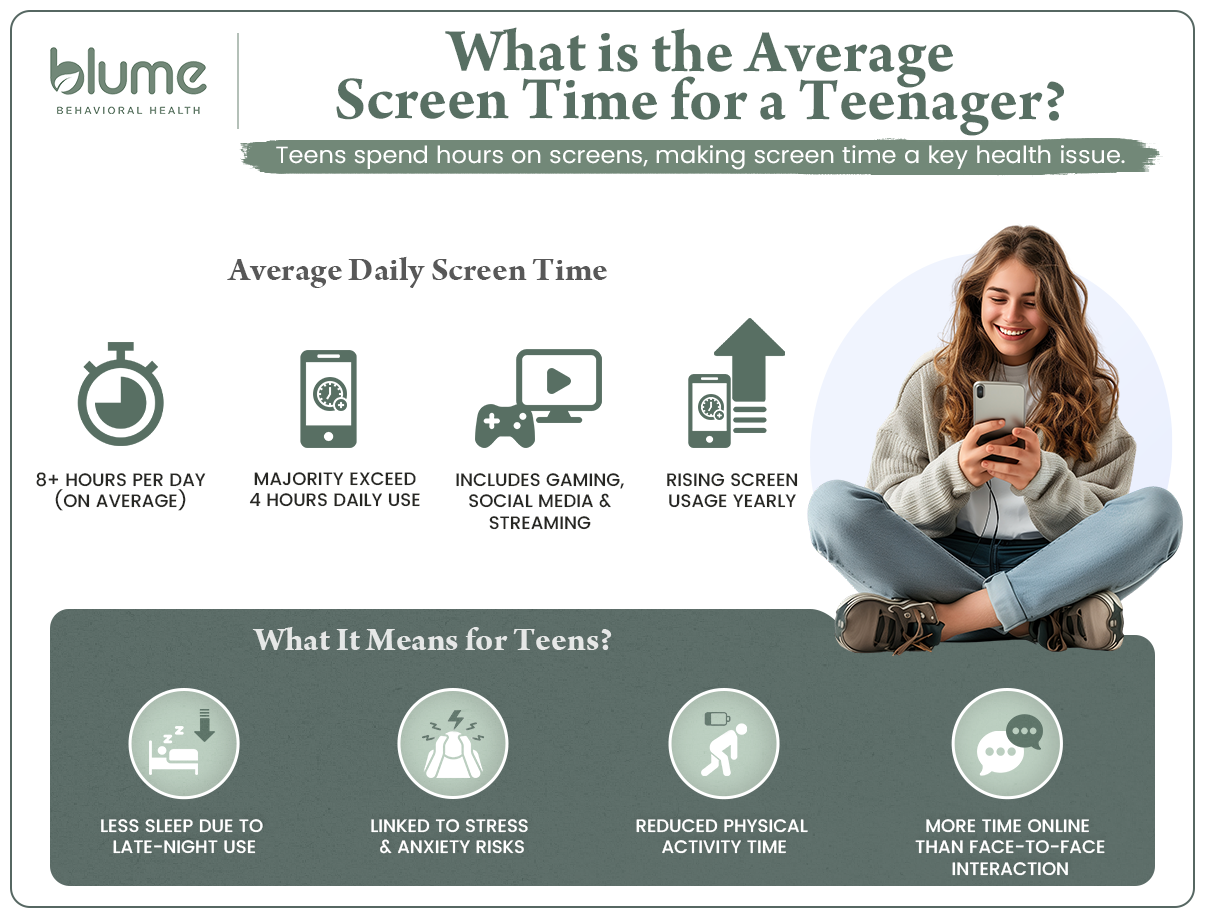
Most health organizations don’t give a one-size-fits-all number for teen screen time anymore. The American Academy of Child and Adolescent Psychiatry (AACAP) does not recommend a specific hourly limit for teens aged 13 to 17. Instead, they advocate for a media use plan that prioritizes quality content and ensures technology does not crowd out healthy behaviors.
Age-Specific Recommendations for Adolescents
Flexibility matters, but it helps to have a starting point. As teens get older, they can handle more freedom, but their brains are still developing impulse control.
Guidelines by age group:
- Early Adolescence (Ages 12-14): Tighter limits help at this age. Consider limiting recreational screen time to 1-2 hours on weekdays to help build healthy habits.
- Middle Adolescence (Ages 15-17): Two hours of recreational screen time on school nights is a good goal, with more room on weekends if grades and sleep stay solid.
- Late Adolescence (Ages 18+): Instead of setting hard rules, parents can help them track their own usage and notice how it affects their mood or focus.
Regardless of age, the “quality over quantity” rule applies. A teen spending three hours editing a film project is engaging differently than one spending three hours on social media.
Effects of Excessive Screen Time
Excessive screen time can cause significant issues in an adolescent’s life, including:
Mental Health Struggles
A clear link is often observed between heavy screen use and mental health struggles. Here’s why:
- Social Comparison: Social media presents curated, unrealistic versions of peer lives, hurting self-esteem and body image.
- Fear of Missing Out (FOMO): Feeling like they have to be online keeps teens in a constant state of stress.
- Cyberbullying: Online harassment follows them home with no escape.
Physical Health Consequences
The physical effects of too much screen time show up fast. Blue light from screens messes with melatonin, making it harder to fall asleep.
Physical side effects include:
- Sedentary Lifestyle: When screens replace movement, teens gain weight and feel more tired.
- Vision and Posture: Staring at screens leads to headaches, blurry vision, and neck pain.
- Neurological Impact: Fast-paced content makes it harder for teens to focus on slower tasks like reading or homework.
Academic and Social Effects
When screens take over, grades usually drop. Constant notifications train the brain to jump around, making deep focus harder. Too much screen time also weakens face-to-face communication skills, making in-person conversations feel awkward.
Tips for Helping Teens Limit Technology Use
While strict limits aren’t always necessary for teens, it’s helpful to set a good example and help your teen limit their technology use for their health. Here are some tips to help you get started with a media use plan that works for your family.
Set Clear Boundaries and Screen-Free Zones
Setting clear tech rules cuts down on daily arguments. The best boundaries protect certain times and spaces for health and connection. Effective boundary strategies include:
- Device-Free Bedrooms: Keep phones out of the bedroom at night to improve sleep.
- Screen-Free Meals: Make breakfast and dinner phone-free to encourage real conversation.
- The “Work First” Rule: Require homework and chores to be completed before recreational screen time.
Create Alternative Activities and Interests
Cutting screen time works best when teens have other things they want to do. Encouraging offline hobbies helps them build skills and find fulfillment away from devices. Engaging alternatives include:
- Physical Movement: Sports, martial arts, dance, hiking, or skateboarding encourage physical activity and regular exercise.
- Creative Arts: Drawing, music, photography, or writing encourages creativity without excessive screen time.
- Hands-on Projects: Cooking, gardening, or building things helps teens develop skills and passions.
- Volunteering: Community service builds empathy and perspective.
Model Healthy Technology Habits
Adolescents often mimic the behaviors they see at home. If parents are constantly checking phones during dinner, it undermines the message that screen limits are important. Ways to model healthy habits include:
- Narrate Your Usage: Explain why you are picking up your phone to help teens distinguish between utility and aimless scrolling.
- Participate in Detoxes: A family “digital detox” shows solidarity and frames breaks from screens as positive.
- Be Present: Put your phone down and make eye contact when your teen speaks to you.
Use Parental Controls and Monitoring Tools
Technical tools provide a necessary layer of support, helping enforce boundaries without constant verbal reminders. Approaches you can use to monitor your teen’s screen time include:
- Transparency: Inform teens that monitoring software is in use and explain why.
- Focus on Safety: Use controls to filter content and manage time limits rather than reading every private message.
- Gradual Release: As teens demonstrate responsibility, controls can be relaxed.
Signs of Technology Dependence and Teens
There is a distinction between heavy use and dependence. Technology dependence is characterized by an inability to regulate usage despite harm to daily life.
Common warning signs include:
- Loss of Interest: Stopping hobbies or sports they previously loved
- Withdrawal Symptoms: Extreme irritability, anxiety, or behavioral struggles when devices are taken away
- Deception: Lying about time spent online or sneaking devices at night
- Physical Neglect: Skipping meals or suffering from sleep deprivation due to screen use
- Mental health struggles: Worsening depression, anxiety, or irritability
Mental health conditions, such as teen depression, can be a consequence of excessive screen time or a catalyst for it. If you notice your teen’s mental health declining, it may be time to seek professional help, including teen depression treatment, to address underlying concerns and support long-term well-being.
When to Seek Professional Help
When screen use severely impacts a teen’s ability to function—resulting in failing grades, severe sleep deprivation, or aggressive behavior—it may be time to seek professional intervention. Treatment often involves addressing underlying emotional drivers while building healthier digital habits. Families can learn more about technology dependence.
Teen Mental Health Treatment Programs at Blume
Blume Behavioral Health understands that technology struggles are often intertwined with complex emotional and behavioral challenges. Our residential treatment programs address the root causes of behavioral issues, including anxiety, depression, and technology dependence. By combining evidence-based therapies with holistic activities, we help teens build resilience and real-world coping skills.
Technology is integrated into our daily lives; it’s not realistic to limit it completely, but you can help your children set healthy limits and habits by monitoring screen time and promoting alternative activities. To explore how our programs can support your family, contact us!
Frequently Asked Questions about Teen Screen Time
What is the 3-6-9-12 Rule for Screen Time?
The 3-6-9-12 rule suggests: no screens before age 3, no personal gaming console before age 6, no supervised internet before age 9, and no unsupervised internet before age 12. It provides a developmental framework for gradually introducing technology.
Is 7 Hours of Screen Time Bad for Teenagers?
Yes, 7 hours of daily screen time is generally considered excessive. & hours of screen time is most likely impacting a teen’s ability to complete homework and other responsibilities and may come at the expense of their sleep schedule.
What is the 30/30/30 rule for screen time?
The 30/30/30 rule is a screen time practice that both parents and adolescents can use. It recommends looking up from screens every 30 minutes and concentrating on something 30 feet away for 30 seconds. This helps maintain eye health.

Dr. Aneta Lotakov Prince is a board-certified psychiatrist with over 20 years of clinical experience treating adolescents and adults facing severe mental illness, co-occurring substance use disorders, and complex emotional and behavioral health challenges. Certified by the American Board of Psychiatry and Neurology, she holds an active DEA registration and California medical license. Dr. Prince’s patient-centered approach is rooted in compassion and driven by a dedication to improving quality of life and supporting long-term recovery. She remains deeply committed to empowering each individual she works with to build a life of purpose, connection, and resilience.